Petersburg, VA
Water Damage Restoration in Petersburg, With Care for What Your Home Is Made Of
Water treats plaster, drywall, hardwood and carpet very differently. We handle water extraction, drying and dehumidifying, mold remediation, flood cleanup, sewage cleanup and the repairs that put rooms back together. Before anything is torn out, we show you what can be dried and kept and what has to go, for homes in Petersburg, Colonial Heights, Hopewell and nearby.
- Free on-site inspection
- Emergency response
- Saved before replaced
- Insurance steps made clear
Where We Work
We are based in Petersburg and serve homes across the area, including Colonial Heights, Hopewell, Fort Lee, Ettrick and Enon. We also cover Chester, Meadowbrook, Bellwood and Bensley.
- Petersburg
- Colonial Heights
- Fort Lee
- Ettrick
- Hopewell
- Enon
- Chester
- Meadowbrook
- Bellwood
- Bensley
If your street sits just outside these towns, give us a call and we will tell you right away whether we can reach you.
Restoration Services for Your Home
Most jobs start with water extraction and move into drying and dehumidifying, because the faster moisture leaves the structure, the more of your home stays in place. When water has sat for a while, or came from a flood or a sewer line, we add flood cleanup, sewage cleanup or mold remediation as the situation calls for. Once everything is dry and verified, our repairs and rebuild work restores drywall, flooring and trim so the room looks and feels like yours again.
Water Extraction
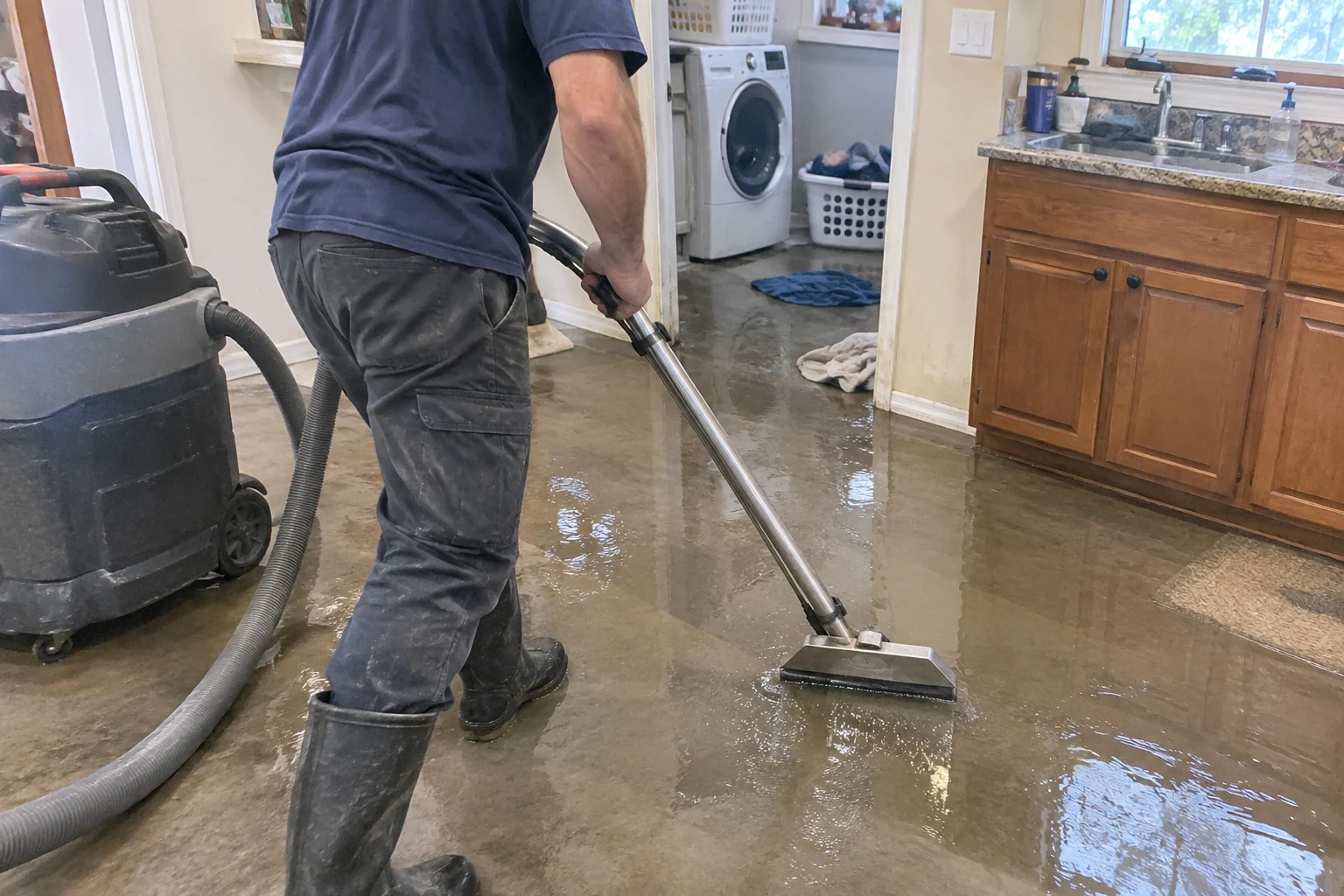
We remove standing water from carpet, hardwood, plaster and crawlspaces, choosing equipment by material so more of your home can be dried rather than torn out.
Drying and Dehumidifying
Air movers and dehumidifiers set for each surface in your home, with daily readings until hardwood, drywall and subfloor return to a true dry standard.
Mold Remediation
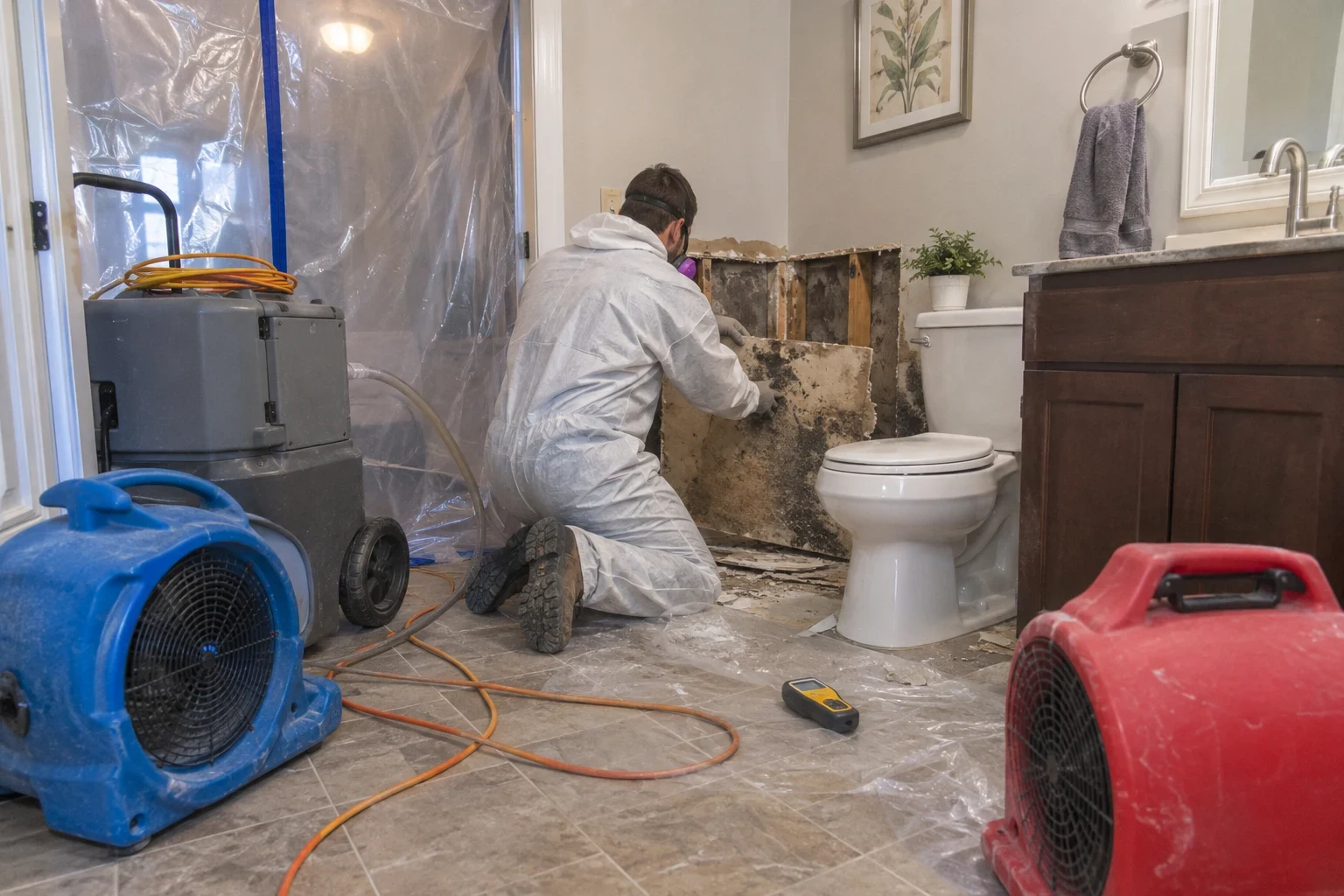
Contained mold removal that decides, surface by surface, what can be cleaned and saved and what has to come out.
Flood Cleanup
We remove floodwater and silt, decide piece by piece what stays and what goes, and leave your home clean and ready for drying.
Repairs and Rebuild
We put back the walls, floors, trim and cabinets that water took out, choosing products that suit each room and how it is likely to get wet again.
Sewage Cleanup
Safe removal of sewage and contaminated materials, with clear answers on which floors, walls and fixtures in your home can be cleaned and which must go.
About Water Damage Restoration Petersburg
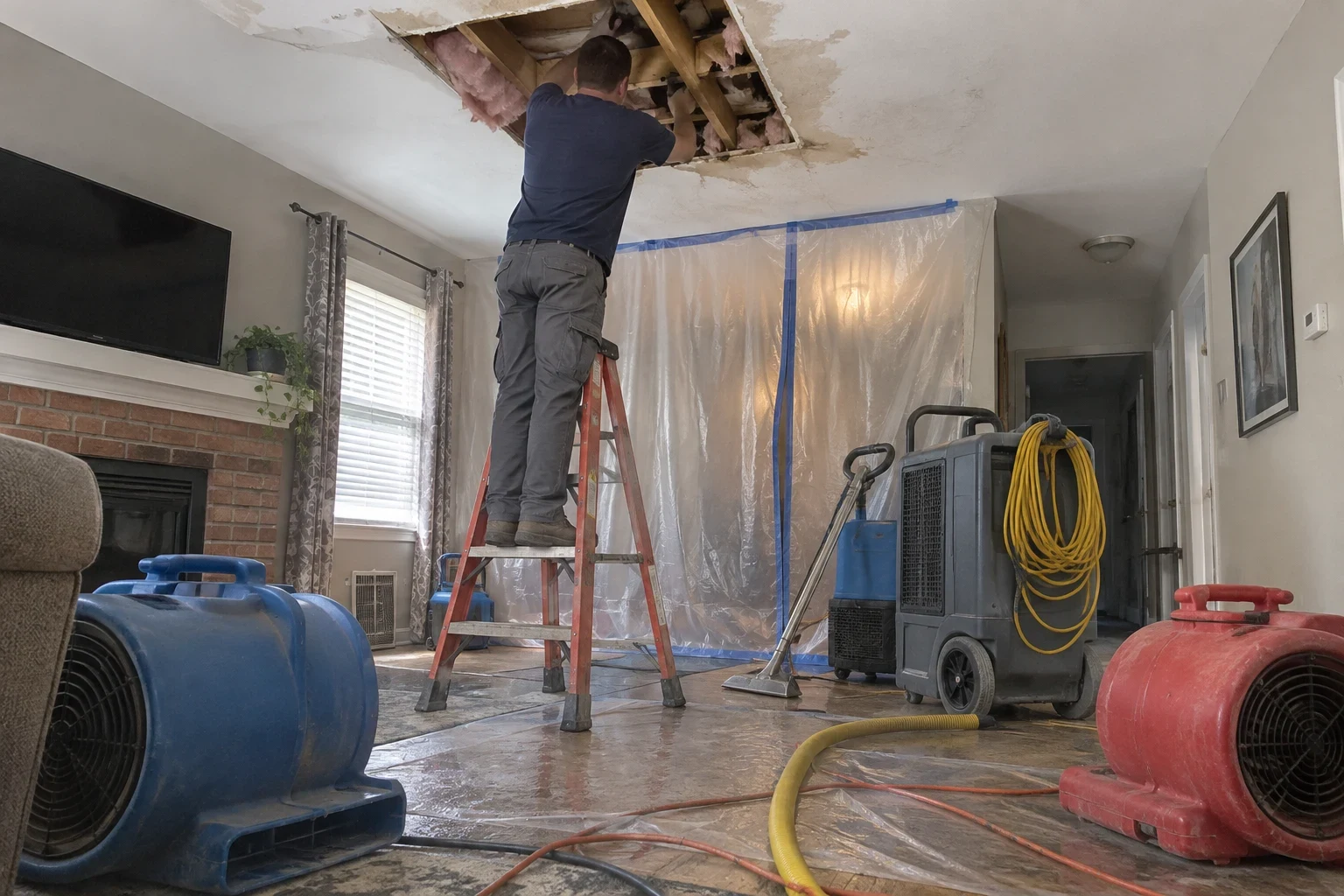
We are a local restoration company working inside homes in Petersburg and the surrounding area. Most of our work begins with a phone call from someone looking at a wet floor and wondering how bad it is. Our job is to answer that honestly and then fix it properly.
We spend more time than most explaining materials. Older homes here often have plaster walls, heart pine floors and crawl spaces, and they behave nothing like the drywall and engineered flooring in newer houses. Knowing the difference is how we keep more of your home and replace less.
- Certifications
- IICRC certified
How We Work Inside Your Home
Restoration is mostly a series of judgment calls about materials. Here is how we make them.
- 01
We read the floor and wall before we cut
Solid hardwood can often be dried in place with mats and patience. Laminate and engineered flooring with a fiberboard core usually swells and cannot be saved. Plaster holds up to water far better than drywall. We tell you which is which in your rooms and why.
- 02
Moisture readings, not guesses
We measure walls, subfloors and framing with moisture meters and check them each visit. Drying ends when the numbers say the wood and drywall are back to normal, not when the surface feels dry to the touch.
- 03
Careful with finishes
We protect floors on the path in and out, move and block furniture off wet carpet, and take care around painted trim and cabinetry. When a wall has to open, we cut a clean, straight line at a height that makes the repair easier to blend.
- 04
Clear answers on insurance
We work with most major insurance companies. We document the damage with photos and readings and explain how the claim process usually goes, while your adjuster makes the coverage decisions.
- 05
Fast when it matters
Our offer is simple: on site in 60 mins or less. The first hours decide how much drywall, padding and subfloor can be kept.
What Shapes the Cost of a Water Damage Job
No two losses cost the same, because the price follows the water and the materials it reached. We walk the home with you and go over each part of the scope before work begins. These are the factors that move the number most.
The on-site inspection is free, and we walk you through the scope line by line before work starts. If the job changes once walls are opened, we show you what we found and talk it through before going further.
- Category of water
- Clean water from a supply line is handled very differently from storm water or sewage. Contaminated water means porous items like carpet and padding are removed rather than dried, and the cleaning steps are more involved.
- How long it sat
- Water caught early often stays in carpet and the lower inches of drywall. Left for a day or two, it wicks up walls and into subfloors, and drying takes longer.
- What the floors and walls are made of
- Drywall is inexpensive to replace but soaks up water quickly. Plaster, hardwood and tile take more time to dry properly but often avoid replacement. Engineered wood and laminate usually come up.
- Square footage and access
- More wet area means more equipment and more days of drying. Crawl spaces, finished basements and wall cavities behind built-ins take extra time to reach.
- Rebuild scope
- If cabinets, flooring or drywall have to be replaced, the finishes you choose and how closely they need to match the rest of the room shape the final cost.
Questions Homeowners Ask Us
- How quickly can you get to my home?
- Our offer is on site in 60 mins or less. Getting there fast matters because drywall and carpet padding start wicking water within hours. While you wait, shut off the water source if you can and keep clear of wet areas near outlets.
- Will my hardwood floors have to be replaced?
- Not always. Solid hardwood that is caught early can often be dried in place with specialized floor mats, though some cupping may need sanding afterward. Engineered and laminate floors are less forgiving and usually come up. We check with meters before giving you an answer.
- Does homeowners insurance cover water damage?
- It often covers sudden events like a burst pipe or failed water heater, and it is less likely to cover slow leaks or flooding without a separate policy. We work with most major insurance companies and provide photos and moisture records for your claim. Your adjuster decides what is covered.
- Do you have to cut open my walls?
- Sometimes. If water stayed in the bottom of a drywall cavity, we may cut a small section to dry the framing and insulation behind it. Plaster walls can often be dried without opening them. We explain the reason before making any cut.
- How long does drying take?
- Most homes dry in three to five days, depending on what got wet and how long the water sat. Dense materials like hardwood, plaster and subfloor take longer than drywall. We keep the equipment running until readings confirm the structure is dry.
- Can I stay in my home during the work?
- In most clean-water jobs, yes. The equipment is noisy and some rooms will be off limits for a few days. With sewage or extensive mold, we may recommend staying elsewhere until the affected areas are cleaned.
- Is the inspection really free?
- Yes. We come out, find the source, measure the moisture and explain what we see at no charge. You decide what to do next.
How a Restoration Job Runs
Most jobs follow the same four stages. The timing depends on how wet the structure is.
- 1
Inspection and plan
We find the source, confirm it is stopped, and map the wet area with meters and thermal readings. You hear in plain terms what we plan to save, what has to come out, and why.
- 2
Extraction and removal
Truck-mounted and portable extractors pull standing water from carpet, floors and low areas. Anything that cannot be dried, such as soaked padding or swollen laminate, is removed and bagged.
- 3
Drying and monitoring
Air movers and dehumidifiers run until readings return to normal, usually several days. We check moisture each visit and adjust the equipment as each room dries.
- 4
Repairs and final walkthrough
Once everything is dry, we rebuild what was removed and match finishes as closely as the originals allow. We walk the rooms with you at the end.
Water in Your Home? Let's Look at It Together
We will find the source, measure the damage and explain what each material needs. The on-site inspection is free.