ServicesFlood Cleanup
Flood Cleanup in Petersburg
When water comes in from outside, it brings silt, debris and bacteria with it. We pump it out, clean what can be saved, remove what cannot, and explain each decision by material, so you know why the carpet goes and the oak floor might stay.
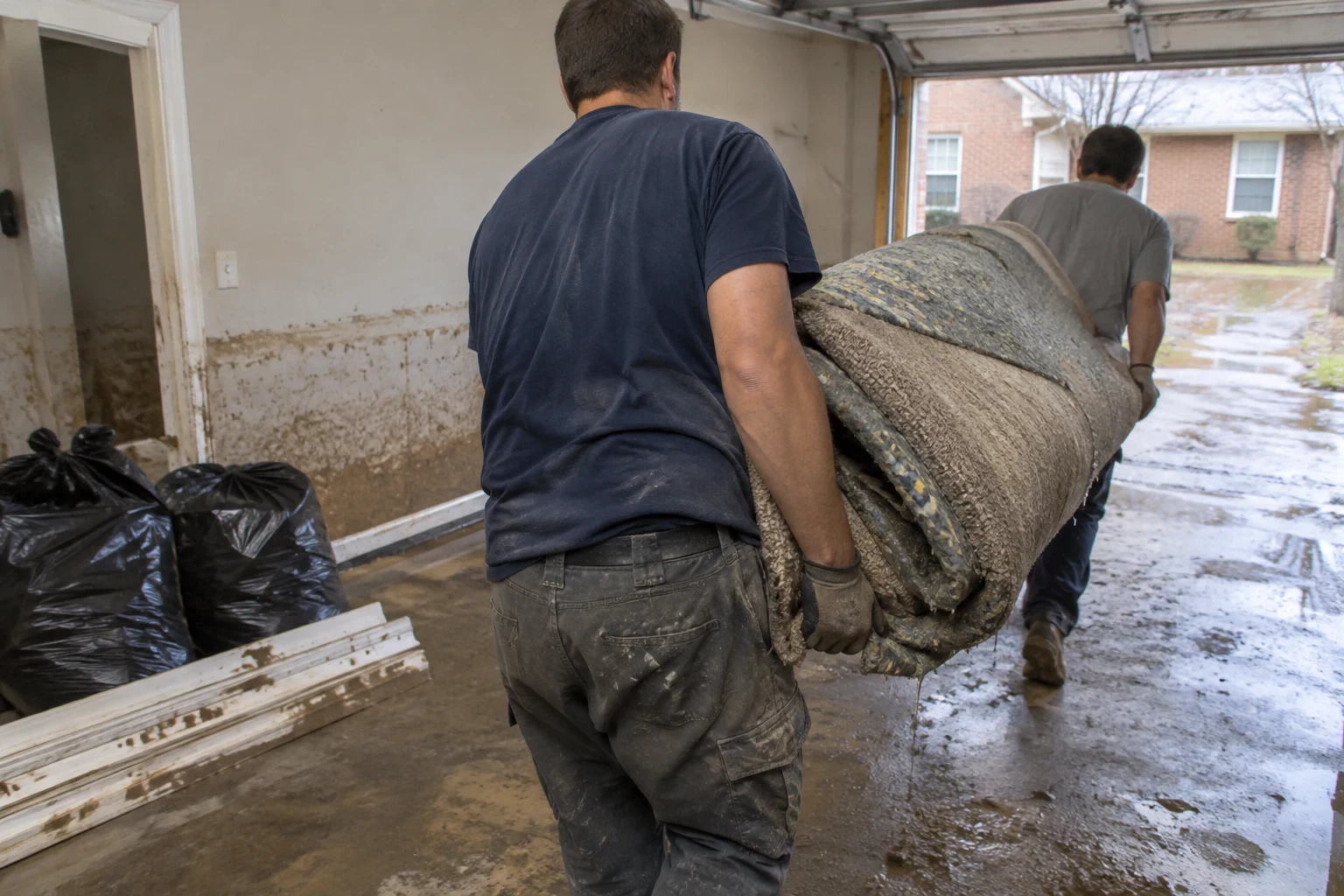
What flood cleanup involves and when you need it
Flood cleanup is for water that reached your home from the outside. That might be a creek or river over its banks, heavy rain sheeting across the yard and under a basement entry, or a high water table seeping up through the concrete floor. Water from those sources is handled as contaminated from the first minute, and that shapes what can be kept. A leak from a supply line is usually a job for water extraction and drying alone. Outside water nearly always means some materials have to come out too.
Our crew is IICRC certified, and we follow its methods for contaminated water. We take out the water and mud first. Next we decide which surfaces can be cleaned and which have absorbed too much, and we sanitize the structure before drying begins.
Outside water does more harm the longer it sits, so once you call, a crew is on site in 60 mins or less with pumps already on the truck.
What the work includes
Pumping and silt removal
Truck-mounted and submersible pumps take out standing water. Then we shovel and squeegee the silt layer that floodwater leaves behind, which carries much of the contamination.
Carpet and pad
Pad soaks up floodwater like a sponge and cannot be cleaned, so it goes. Carpet touched by outside water is removed as well. We photograph and measure both before they leave for your insurance file.
Drywall flood cuts
Gypsum wicks water upward. We cut the wall a measured distance above the waterline, usually 12 to 24 inches, and remove wet fiberglass insulation behind it so the studs can be cleaned and dried.
Plaster and hardwood assessment
Plaster on lath, common in older Petersburg houses, handles water better than drywall and can sometimes be kept. Solid oak floors may be dried and refinished, while engineered wood and laminate with fiberboard cores usually swell and have to come out. We test with moisture meters before deciding.
Cleaning and antimicrobial treatment
Every surface that stays gets washed and treated with an antimicrobial suited to contaminated water, including studs, subfloor and slab.
Contents sorting
We help you separate furniture and belongings into what can be cleaned and what should be discarded, and we list the discards for your claim.
Signs your home needs flood cleanup
Water came in from outside
If water rose through a door, window well or foundation crack, treat it as contaminated even when it looks clear.
A line of silt or mud
A brown line on walls or a film on the floor marks how high the water reached and where contamination settled.
Floors buckling or soft
Cupped boards, lifting vinyl plank or a spongy subfloor mean water has worked into the layers below the surface.
Wet crawl space or basement
Standing water under the house soaks joists and insulation and raises humidity in every room above it.
An earthy or sour smell
Odor in the days after a storm points to wet drywall, pad or framing that is starting to grow bacteria or mold.
How a flood cleanup day runs
- 1
Safety check and documentation
We check power and gas near the water, then photograph every room and record moisture readings before anything moves. Those photos help support your insurance claim.
- 2
Water and silt out
Pumps and extractors remove standing water, then we clear mud and debris by hand from floors, stairs and crawl spaces.
- 3
Removal, explained first
We walk you through each layer: pad, carpet, drywall, insulation, flooring. You hear what we plan to remove and why before we cut or pull anything.
- 4
Clean, treat, set up drying
Exposed framing and subfloor are washed and treated. We then place air movers and dehumidifiers, which our drying and dehumidifying service takes through to dry readings.
- 5
Plan for what comes next
Once the structure is dry, we can quote repairs and rebuild work, from new drywall to matched trim and flooring.
What moves the cost of flood cleanup
Flood cleanup is priced by the work the water created, not a flat fee. After the free on-site inspection you get a written, line-item estimate so you can see each charge. Where insurance applies, we document to the standards adjusters expect.
- Water depth and spread
- Two inches across one room is a different job from a foot of water through a full basement.
- Which materials got wet
- Carpet, pad, drywall and laminate add removal and disposal. Tile over concrete or solid hardwood that can be dried keeps costs down.
- Access
- Tight crawl spaces and finished basements with built-ins take longer to clear and dry than open slab floors.
- How long the water sat
- Water left for several days spreads further into walls and raises the chance of mold remediation being needed.
Flood cleanup questions
Something not covered here? (804) 207-7415
Can I keep my hardwood floors after a flood?
Sometimes. Solid oak that was wet for a short time can often be dried in place and refinished. Engineered wood and laminate with fiberboard cores usually swell and delaminate. We take moisture readings and give you an honest answer before anything comes up.
Why does the drywall have to be cut if it looks fine?
Drywall wicks floodwater well above the visible line, and the paper facing feeds mold. The insulation behind it holds water against the studs. A flood cut lets us clean and dry the framing properly.
Is the floodwater in my house dangerous?
Water from outside carries soil bacteria, fuel and sometimes sewage. Keep children and pets away, wear boots and gloves, and do not run fans that spread dust. If a toilet or drain backed up too, our sewage cleanup process applies.
Will insurance cover flood cleanup?
It depends on your policy. Standard homeowners policies often exclude outside flooding, which flood insurance covers instead. We work with most major insurance companies and provide the photos, readings and line items your adjuster will ask for, but the coverage decision is theirs.
How soon should cleanup start?
As soon as possible. Mold can begin growing on wet drywall and wood within a day or two. We answer around the clock, and a crew can be at your door in 60 mins or less.
Water in your home after a storm
Tell us where the water is and how high it reached. We will come out, look at every wet surface with you and explain the plan before work begins.