ServicesRepairs and Rebuild
Water Damage Repairs and Rebuild in Petersburg
Once your home is dry, the work turns to putting it back. We rebuild walls, floors, trim and cabinets after water damage, explain the options for each room, and finish the job so the repaired areas blend with the rest of the house.
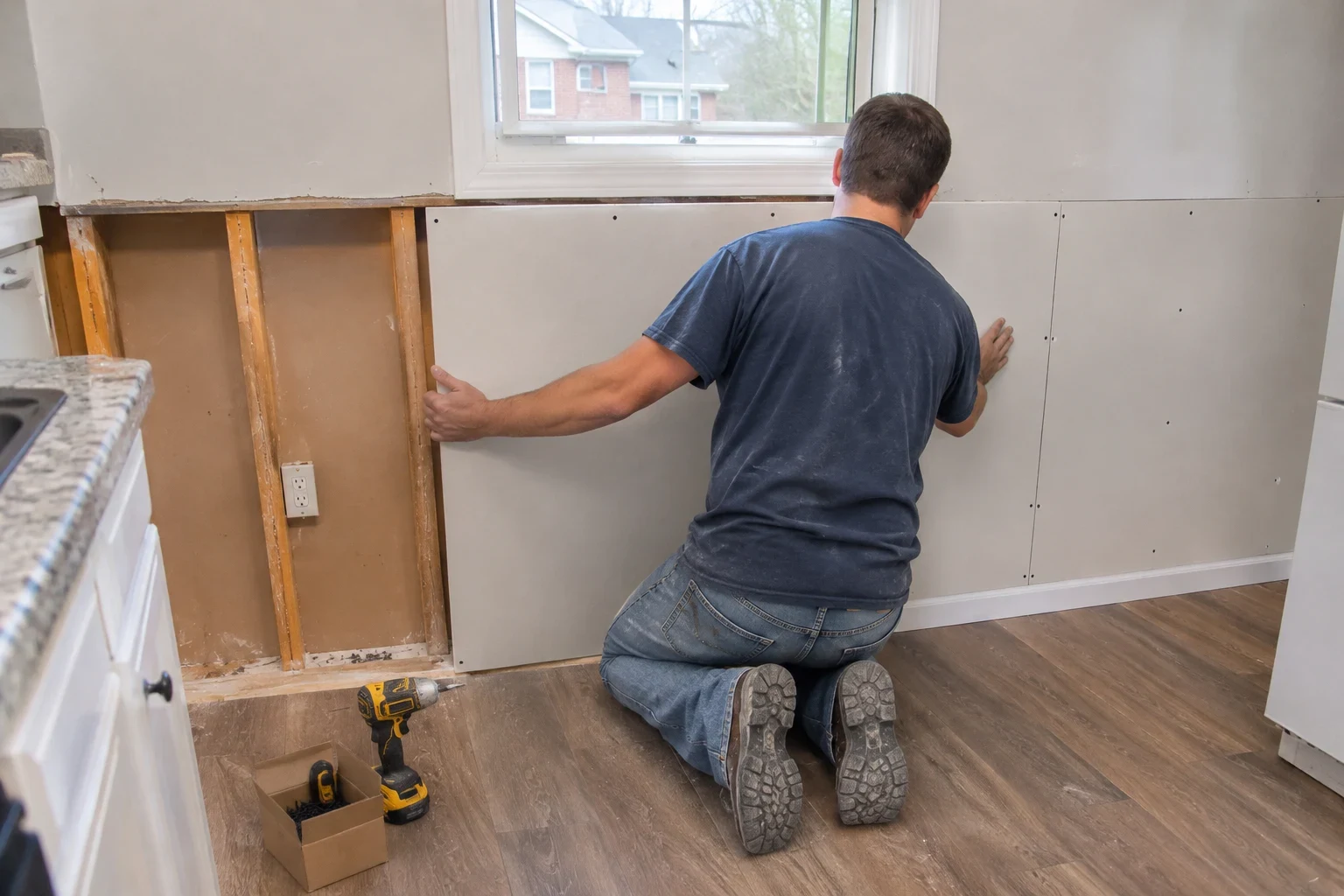
Putting the Rooms Back, Not Just Patching Them
Repairs and rebuild is the last stage of a water loss. The standing water is gone, the structure has been dried and confirmed dry, and the wet drywall, insulation and flooring that could not be saved have been removed. What is left is open wall cavities, bare subfloor and missing cabinets. Our job is to close all of that up properly.
What you put back matters as much as the workmanship. Standard drywall, moisture-resistant board, plaster, solid hardwood, engineered wood and vinyl plank each behave differently the next time a pipe leaks or a basement takes on water. We walk you through those trade-offs room by room, so a laundry room or finished basement gets products that tolerate moisture, and a living room keeps the finish it had.
Because we often handle the water extraction and drying ourselves, we know exactly what was removed and why. That makes the rebuild scope clear from the start.
What Our Rebuild Work Covers
- Drywall and plaster walls
- We hang, tape and finish new drywall, using moisture-resistant board in basements, baths and laundry areas. Many older homes around Petersburg have plaster walls, and we can patch them with veneer plaster or blend drywall in so the transition does not show under paint.
- Subfloor and flooring
- Swollen OSB or delaminated plywood subfloor is cut out and replaced before any finish flooring goes down. We install hardwood, engineered wood, luxury vinyl plank, laminate, tile or carpet, and explain which of them recover from a future leak and which do not.
- Insulation and framing
- Wet fiberglass batts lose their value and hold moisture against framing, so they come out and new insulation goes in. Damaged studs, plates and joists are sistered or replaced where needed.
- Trim, doors and cabinets
- MDF baseboard and particleboard cabinet boxes swell and rarely recover. We replace them with matching profiles, and we can talk through solid wood or PVC trim and plywood cabinet boxes for rooms at risk.
- Paint and finish
- We prime new surfaces and paint to match, often carrying color to the nearest corner so the repair disappears instead of reading as a patch.
Signs Your Home Needs Rebuild Work
Open walls after drying
If drywall was cut away to dry the cavities, those openings need to be closed with the right board and insulation before the room is usable.
Floors that cup, crown or feel soft
Hardwood that cups or crowns after drying, or a floor that flexes underfoot, usually points to damaged subfloor that needs replacing.
Baseboards and cabinets that swelled
MDF and particleboard puff up at the edges once wet. They will not shrink back, and they can hide moisture behind them.
Stains or bubbling paint
Stains that return through paint, or finishes that bubble and peel, mean the surface was damaged and should be replaced rather than painted over.
Lingering odor in one room
A musty smell after drying can mean something is still wet inside a wall or under a floor. We check with moisture meters before anything is closed up.
What Shapes the Cost of a Rebuild
Rebuild pricing follows what was removed and what you choose to put back. We do not quote a figure until we have seen the space, and the written scope shows each line so there are no surprise charges later.
How much was removed
A two-foot flood cut along one wall is a different job from full-height drywall, insulation and subfloor across several rooms.
Material selection
Matching existing solid hardwood or plaster costs more than vinyl plank or standard drywall. Moisture-resistant board and plywood cabinet boxes add a little up front.
Matching existing finishes
Blending into older trim profiles, discontinued flooring or a specific paint color takes more time than finishing a room end to end.
Hidden structural damage
Rotted sill plates, joists or subfloor found once walls and floors are open add to the scope. We photograph these and explain them before proceeding.
Permits and insurance scope
Some work requires a permit and inspection. If your insurer is involved, the approved scope affects what is covered and what is an upgrade.
How a Rebuild Runs
- 1
Inspection and moisture check
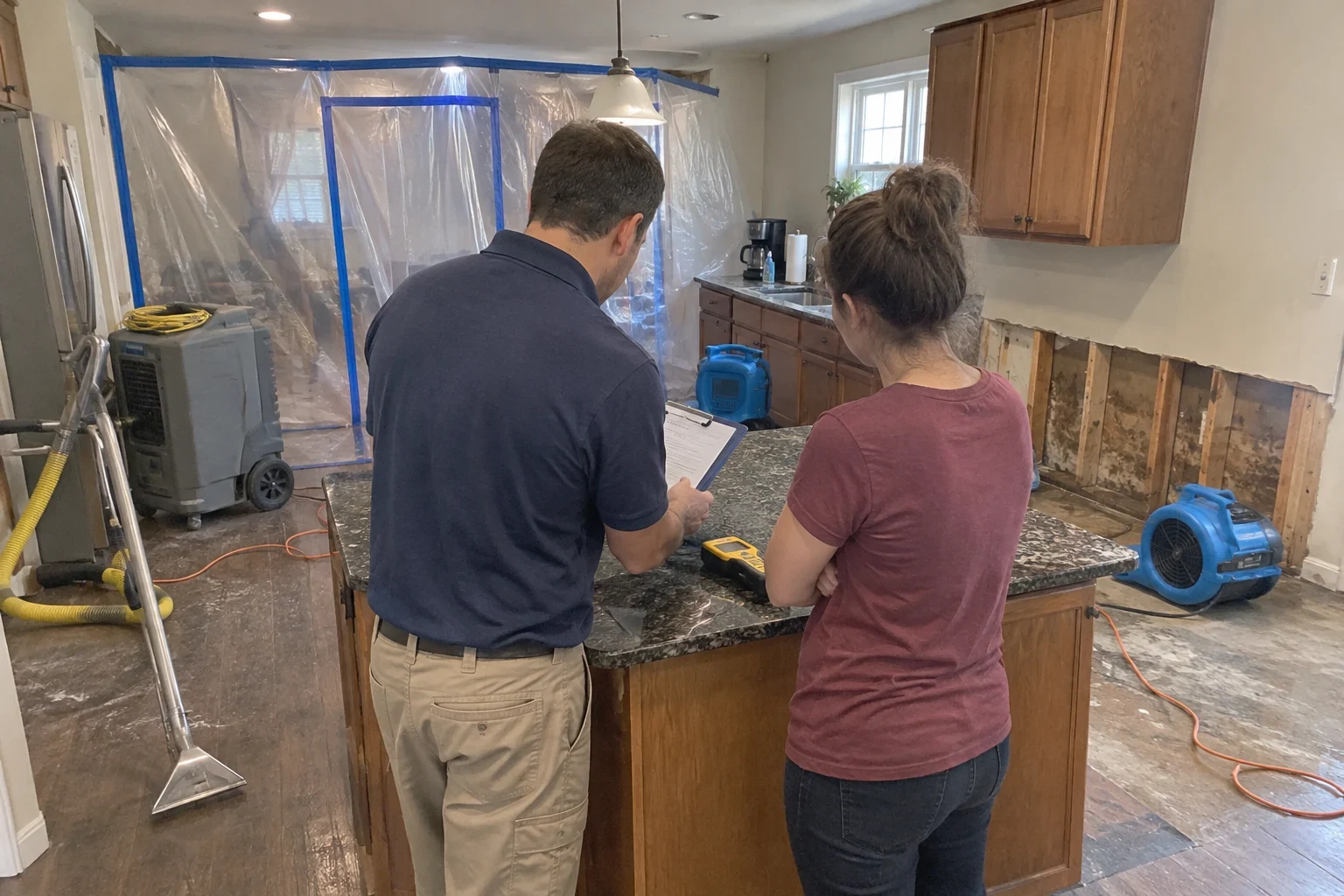
We visit, take moisture readings and photograph what was removed and what remains. Nothing gets closed up until the readings show the structure is dry.
- 2
Written scope and finish choices
You get a line-item scope listing each surface and the product planned for it. We go over options for each room and note where a moisture-tolerant choice is worth considering.
- 3
Structure first, finishes second
Framing, subfloor, insulation and drywall go in first. Where the work calls for a permit and inspection, we pull it and schedule the inspection before walls are closed.
- 4
Finish, clean and walk through
Flooring, trim, cabinets and paint follow. We clean up dust daily, protect the rooms you are still living in, and walk the finished space with you.
Repairs and Rebuild Questions
Do you work with my insurance company on the rebuild?
We work with most major insurance companies. We document the damage with photos and a line-item scope your adjuster can review. The adjuster decides coverage, and we explain where any upgrade you choose falls outside it.
Can you match my plaster walls and old trim?
Usually, yes. Plaster can be patched with veneer plaster or blended with drywall so the seam does not show, and many older baseboard and casing profiles can be matched or closely reproduced. We tell you up front if an exact match is not possible.
Do I have to replace the whole floor or just the wet part?
It depends on the flooring. Tile and vinyl plank can often be replaced in sections. Hardwood that runs continuously through rooms may need to be replaced or refinished across a larger area so the color and grain stay consistent. We show you both options.
Why wait to rebuild until everything is dry?
Closing a wall or laying flooring over damp framing traps moisture and invites mold. Our team is IICRC certified, and we confirm dryness with meter readings before rebuilding. If the structure is not dry yet, our drying and dehumidifying service comes first.
Can we stay in the house during the rebuild?
Most families do. We seal off the work area with plastic sheeting, protect floors along the path in and out, and clean up at the end of each day so the rest of your home stays livable.
Ready to Put the Room Back Together
If water has already been in your home, we are on site in 60 mins or less, day or night, and we can follow through from extraction to the final coat of paint. Start with a free inspection and a clear list of material choices.