ServicesSewage Cleanup
Sewage Cleanup in Petersburg
A sewage backup is a health problem first and a water problem second. We contain the area, remove contaminated water and anything it has soaked into, then clean, disinfect and dry what can safely stay. You get a plain explanation of each decision before we cut or haul anything out.
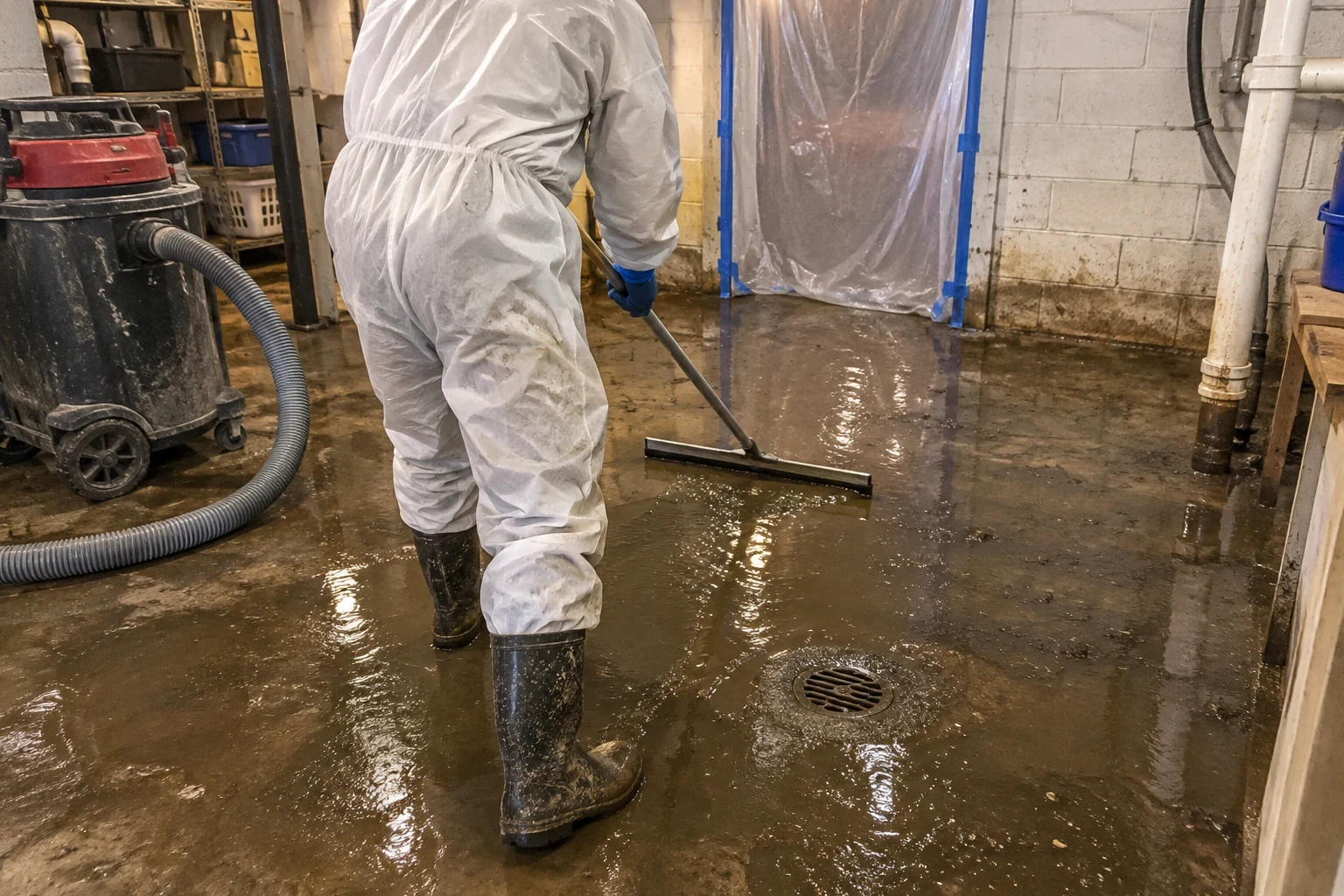
What sewage cleanup involves
Water from a backed-up toilet, floor drain or main sewer line is classed as Category 3, the most contaminated kind. It carries bacteria and viruses that soak into anything porous. That changes the job. Ordinary water extraction and drying are not enough on their own, and some materials simply cannot be made safe again.
Our crew is IICRC certified, and we follow its approach to contaminated water: protect people first, remove what has absorbed sewage, clean and disinfect the hard surfaces that remain, then dry the structure fully. We take the time to show you why each piece of your home stays or goes.
Many homes around Petersburg have basements, crawl spaces or older cast iron drain lines, which is often where backups start. Wherever it begins, the sooner the water comes out, the more of your flooring and walls can usually be kept.
What the work includes
Containment and protective gear
We seal off the affected rooms with plastic sheeting and set up air filtration so contamination does not travel through the house. Our crew wears protective equipment, and we ask that children and pets stay clear.
Removal of sewage water and solids
Truck-mounted or portable pumps pull out standing water and waste. Solids are bagged and disposed of properly, not rinsed down another drain.
Porous materials taken out
Carpet and pad, upholstered items, insulation and drywall that sewage has wicked into are removed. Drywall is usually cut a set distance above the visible waterline, because it draws moisture upward farther than it looks.
Cleaning and disinfecting hard surfaces
Ceramic and porcelain tile, sealed concrete, vinyl plank, metal and solid wood framing can usually be scrubbed and treated with an antimicrobial. We clean grout lines and baseboard gaps by hand, where residue tends to sit.
Structural drying
Once the area is clean, our drying and dehumidifying equipment brings framing and subfloor back to normal moisture levels. We take moisture readings until the numbers say the structure is dry, not just the surface.
A clear handoff to rebuild
When drywall, flooring or trim has to be replaced, our repairs and rebuild crew can pick up from there, matching finishes to the rest of the room.
Signs you are dealing with sewage
Water rising from a floor drain
Dark or gray water coming up through a basement floor drain usually means the main line is blocked. It will keep returning each time someone runs a faucet or flushes.
Several fixtures backing up at once
If a tub fills when the toilet flushes, the problem is past a single fixture. Stop using water in the house until the line is cleared.
A persistent sewer odor
A smell that lingers after you have cleaned often means sewage has reached carpet pad, subfloor or the cavity behind drywall.
Stains spreading up walls or baseboards
Brown tide lines on drywall or swelling in MDF baseboards show that contaminated water has wicked deeper than the surface.
Damp crawl space after a heavy storm
Heavy rain can overload municipal lines and push sewage back into low points. Standing water under the house with an odor should be treated as contaminated.
How the day runs
- 1
Your call and our arrival
Tell us where the water is and how far it has spread. We are on site in 60 mins or less, and we start with a walk-through and moisture readings.
- 2
Assessment and removal plan
We point out what can be cleaned and what has to come out, and we photograph what we find. You approve the plan before removal begins.
- 3
Containment, extraction and removal
The area is sealed, sewage is pumped out and contaminated debris is bagged and carried out with care for the rooms we pass through.
- 4
Clean, disinfect and dry
Remaining surfaces are washed and treated, then dehumidifiers and air movers run while we check readings on each visit. If moisture has lingered long enough to start growth, we address it through mold remediation.
- 5
Final check and next steps
We confirm the area is clean and dry, review the photos and readings with you and talk through any rebuild.
What moves the cost
Sewage cleanup is priced from what we find on the walk-through, so we give you a written, line-item estimate after the inspection rather than a guess over the phone. The biggest drivers are how far the water traveled and what it touched. We work with most major insurance companies. If you are filing a claim, we share our photos and readings and walk you through the usual order of events, while coverage itself stays your adjuster's decision.
- Area affected
- A single bathroom costs far less to contain and clean than a finished basement with several rooms.
- Materials involved
- Tile and sealed concrete are cleaned in place. Carpet, pad, drywall and insulation must be removed and later replaced, which adds labor and disposal.
- Time since the backup
- Sewage that has sat for a day or more spreads deeper into wood and drywall, and drying takes longer.
- Access
- Tight crawl spaces and finished ceilings below a leaking stack take more time to reach and protect.
Sewage cleanup questions
Something not covered here? (804) 207-7415
Can my hardwood floors be saved after a sewage backup?
Sometimes. Site-finished solid hardwood that was wet briefly may be cleaned, disinfected and dried, though it often needs refinishing. Engineered wood and laminate have cores that soak up contaminated water and usually have to be replaced. We test the boards and subfloor before giving you an answer.
Is it safe to clean up a small backup myself?
A small toilet overflow onto tile can often be handled with gloves, a disinfectant and good ventilation. Once sewage reaches carpet, drywall or a crawl space, it is safer to have it professionally removed, because the contamination is out of sight.
What about older plaster walls?
Plaster on wood or metal lath holds up to brief water better than drywall and can sometimes be cleaned and dried in place. If sewage soaked behind it into the lath and insulation, sections may need to come out. We open small inspection holes before deciding.
Does homeowners insurance cover sewage cleanup?
Coverage varies from one policy to the next. A sewer backup is often excluded from a standard policy unless a specific endorsement was added, so it is worth checking your declarations page. We document the damage with photos and moisture readings so your adjuster has a clear record to work from.
Do you serve towns outside Petersburg?
Yes. We regularly work in Colonial Heights, Hopewell, Chester, Ettrick and Enon, along with the other communities listed on our Service Areas page.
Stop the spread before it reaches more of your home
Keep everyone out of the affected rooms and avoid running water. A free on-site inspection tells you exactly what can be saved, from flooring to trim.