ServicesWater Extraction
Water Extraction in Petersburg
Standing water does its worst damage in the first hours, soaking carpet pad, wicking up drywall and swelling hardwood. We pull it out with extractors matched to each surface in your home, then show you plainly what can be saved and what cannot.
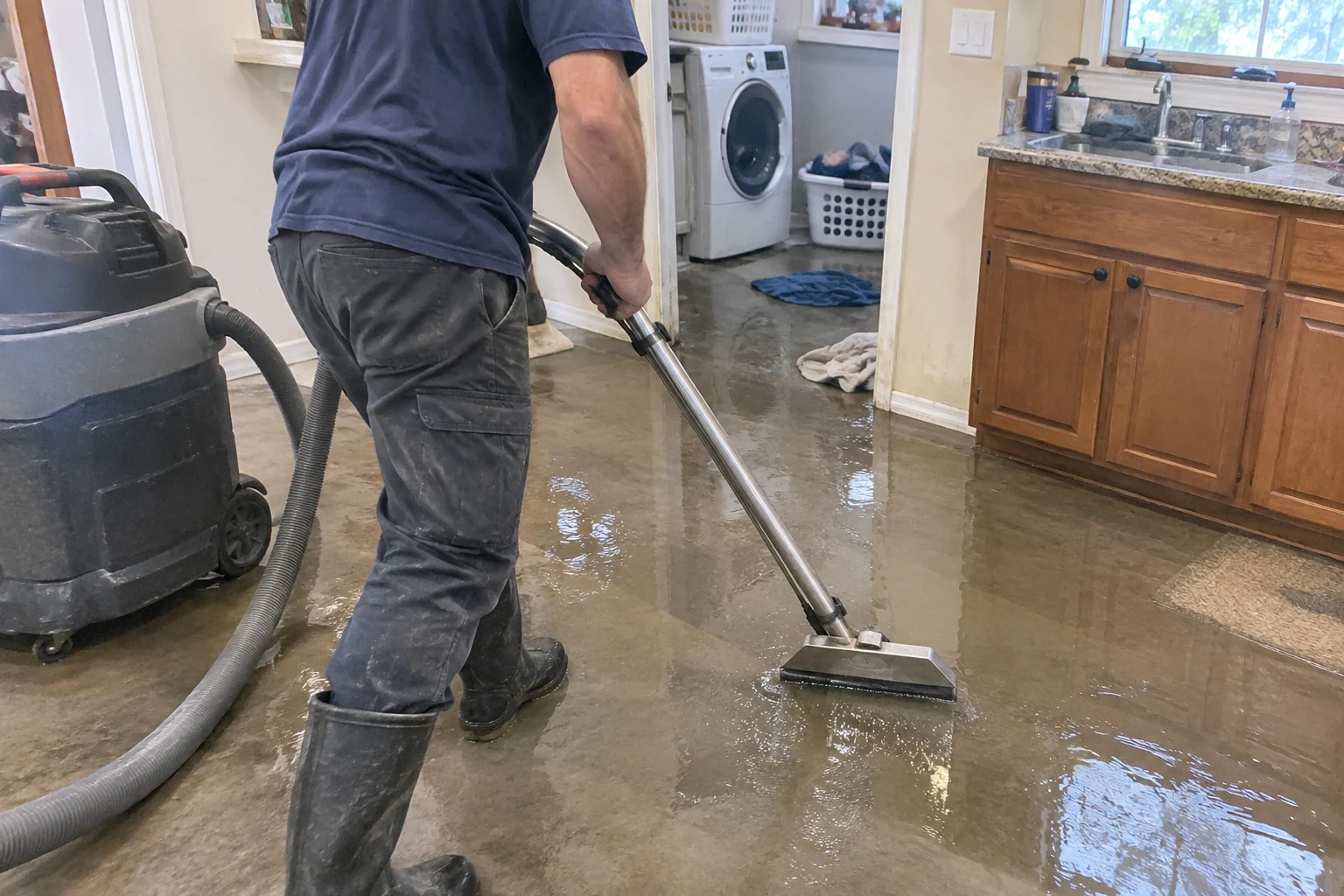
Getting the water out before it settles in
Water extraction is the first step after a burst supply line, an overflowing washer or water seeping through a basement wall. It means removing liquid water from floors, carpet, pad and wall cavities, not just wiping the surface. Every gallon we extract is a gallon a dehumidifier does not have to pull from the air over the following days.
How we extract depends on what the water is sitting in. Carpet over synthetic pad can often be extracted in place. Solid hardwood needs slower, sealed suction so boards are not pushed further out of shape. Plaster walls, common in the older houses around Petersburg, hold water differently than modern drywall and need their own plan. Our technicians are IICRC certified, and that training shapes how we read each material before the first hose goes down.
Once the water is out, the work moves to drying and dehumidifying, and later to repairs and rebuild if anything has to be replaced.
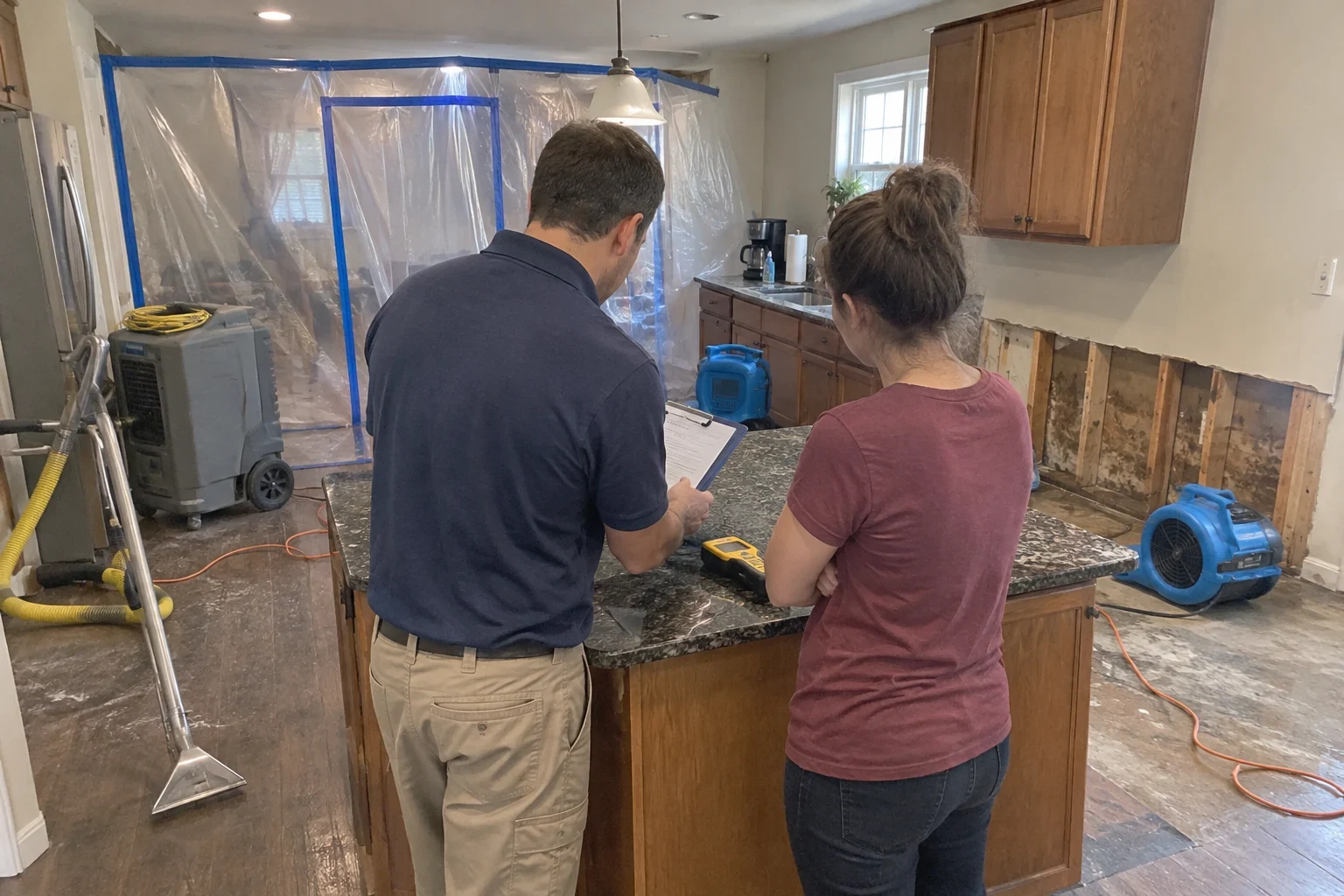
What water extraction includes
- 01
Truck-mounted and portable extraction
High-volume truck-mounted units handle large areas of carpet and open floor. Portable extractors and wands reach upstairs rooms, closets and tight corners where hoses cannot run easily.
- 02
Carpet and pad assessment
Rebond foam pad acts like a sponge and rarely dries well, so after a clean-water loss we often remove the pad and keep the carpet. Wool and nylon carpets respond differently to water and heat, and we tell you which you have before deciding.
- 03
Hardwood, engineered and laminate floors
Solid oak can often recover if water is pulled quickly and the boards dry slowly. Engineered floors with a thin veneer, and laminate with a fiberboard core, tend to swell at the seams and seldom come back, so we say so early.
- 04
Moisture mapping
Meters and a thermal camera show where water traveled under baseboards, behind cabinets and into the subfloor. We photograph the readings so you and your adjuster see the same picture we do.
- 05
Protecting what stayed dry
We move furniture off wet floors, set blocks and foil under legs that must stay, and lay protection along the paths our crew walks.
Questions about Water Extraction?
Call(804) 207-7415When water extraction is the right call
Standing water anywhere
Even a shallow puddle is already working into seams, pad and subfloor. Pulling it up early keeps more of the floor in place.
Carpet that squishes underfoot
A step that leaves a wet print means the pad below is soaked, even if the carpet face looks barely damp.
Hardwood starting to cup
When board edges sit higher than their centers, water has reached the underside. Fast extraction gives the wood its best chance to flatten.
Dark lines at the bottom of walls
Drywall and plaster draw water upward. A stain rising from the baseboard tells you the cavity behind it is wet as well.
Water in the crawlspace or basement
A heavy summer storm can leave water pooled beneath the house, and that moisture lifts the humidity in every room overhead.
How the visit runs
- 1
The phone call and arrival
Describe what happened and which rooms are wet. A crew is on site in 60 mins or less, and the first task is safety: making sure the leak is stopped and checking for power near wet floors and outlets.
- 2
Inspection and a material plan
We take moisture readings, determine the category of water and photograph the damage. Before anything starts, we go over each material with you, what should be saved and what may have to come out.
- 3
Extraction, room by room
Work begins in the wettest spots and moves outward, with the tool suited to each surface. Pad that cannot be saved is pulled and bagged so it stops releasing moisture into the room.
- 4
Readings and handoff to drying
A second round of readings follows extraction, and air movers and dehumidifiers go wherever the numbers point. Every reading is recorded and left with you for your claim.
What moves the cost of water extraction
Three things set the price: the amount of water, how far it traveled and which materials took it in. Once we have inspected, you receive a line-item estimate that shows each charge before the work goes further. We work with most major insurance companies. Your adjuster decides what is covered, and our part is supplying clear photos, readings and a plain account of the work.
- Volume and spread
- A single wet kitchen floor is a small job next to water that crossed three rooms and ran down a stairwell.
- Category of water
- A clean supply-line leak calls for different handling than gray water from a dishwasher or washer. Anything involving sewage is its own job under sewage cleanup.
- What got wet
- Carpet on foam pad, solid hardwood and plaster each take different equipment and different amounts of time. Some materials cannot be extracted at all and have to be removed.
- Reaching the water
- Crawlspaces, finished basements and second floors take longer to get equipment into than an open ground-floor room.
- Time before we arrived
- Water that sat for a day or longer has soaked further into subfloor and wall cavities, and pulling it out takes more passes.
Water extraction questions
How soon will someone arrive after I phone?
Our crews are on site in 60 mins or less. Speed counts here, because pad and drywall start drawing water upward within minutes. Until we get there, turn off the water supply if it is safe to reach and keep everyone off soaked floors.
Can my carpet be saved?
Frequently, when the water was clean and we get to it early. The pad nearly always comes out since it holds water and rarely dries through, but the carpet on top can often be extracted, dried and stretched back in place. After gray water or a long wait, replacing it is usually the safer call.
Will my hardwood floors have to come out?
Not necessarily. Solid hardwood often settles back when the water is pulled quickly and the boards dry slowly while we monitor them. Engineered and laminate floors forgive much less, and we give you a straight answer once the moisture readings are in.
Is extraction the same as drying?
No. Extraction takes out the liquid water. Drying and dehumidifying follows over several days, drawing leftover moisture from wood, drywall and the air so mold has no chance to start.
Is a shop vac good enough?
For a small spill on tile or vinyl, it can help. It will not reach water held in carpet pad or inside a wall, so on anything larger it is safer to leave the job to proper extraction equipment.
Let us get the water out of your home
The first hours decide how much of your floors and walls can be kept. Our crew will extract the water, explain each material and leave you with readings and photos for your claim.