ServicesDrying and Dehumidifying
Drying and Dehumidifying in Petersburg
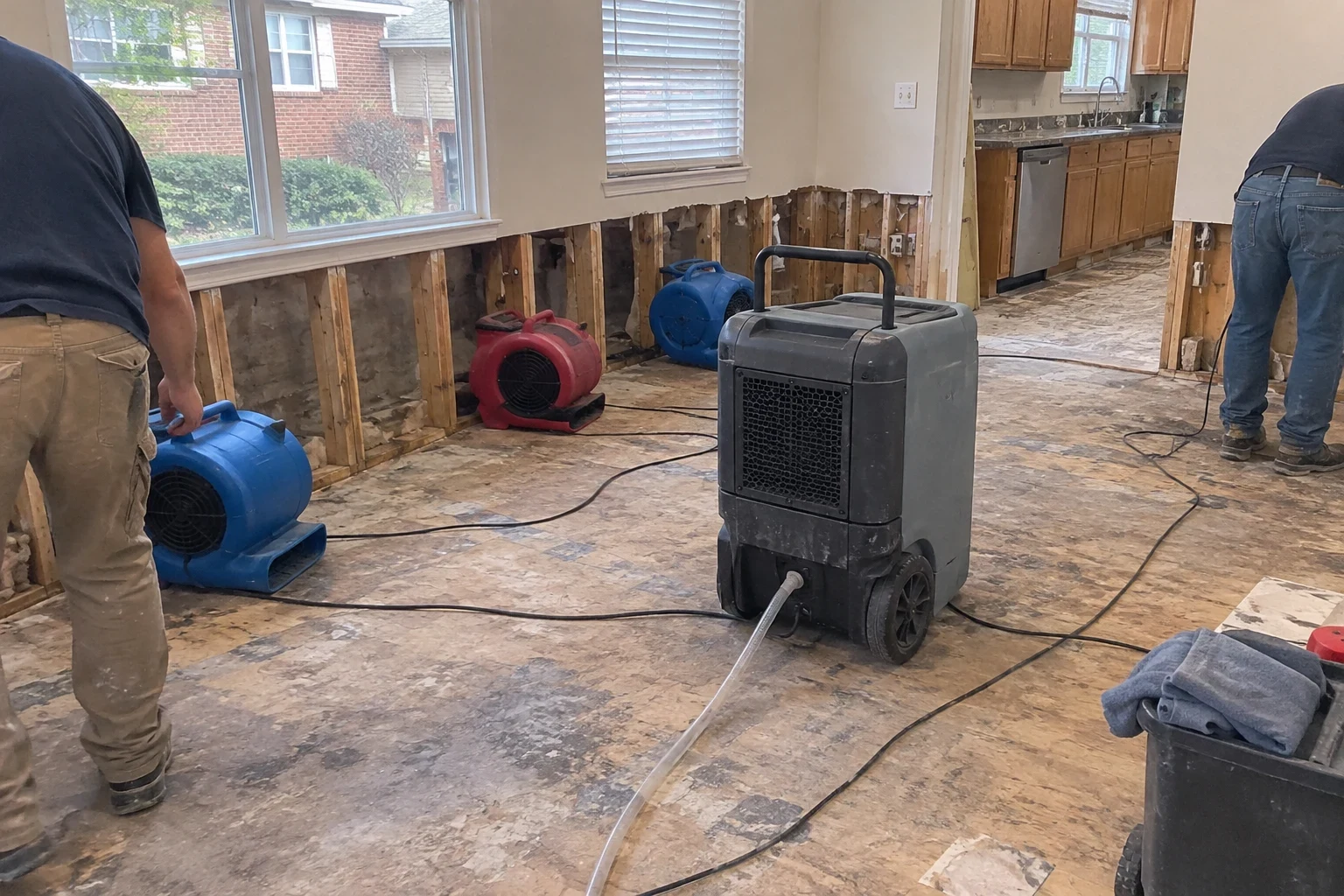
Extraction removes the water you can see. Drying and dehumidifying removes what has soaked into your floors, walls and subfloor. We position air movers and dehumidifiers for oak flooring, drywall or plaster, then take readings at every marked spot until each one measures dry.
Why drying is its own stage of the job
A floor can feel dry to the touch while the plywood beneath it still holds enough water to cup boards and feed mold. Drying and dehumidifying deals with that hidden moisture. It follows water extraction, and it largely decides whether your floors and walls can be saved or need to come out.
Every material gives up water at its own pace. Drywall dries fairly quickly once air moves across both faces. Solid hardwood is slower and needs steady, controlled drying so it flattens instead of cracking. Plaster over wood lath, common in older Petersburg homes, holds water deep in the wall and takes patience. We plan the setup around what your home is actually built from.
Our technicians are IICRC certified, and we work from moisture readings rather than guesswork. When we tell you a room is dry, we can show you the numbers.
What the drying work includes
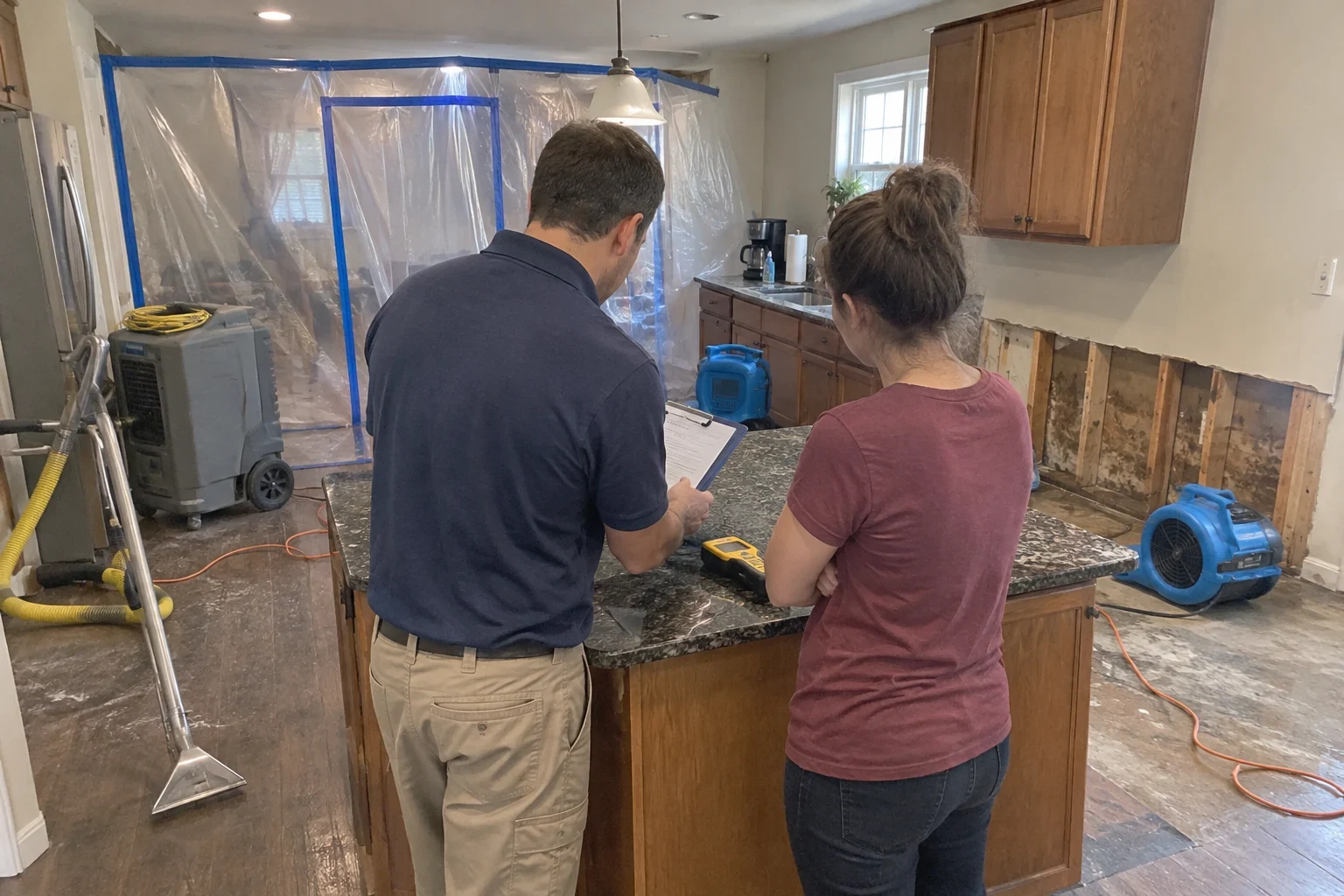
- Moisture mapping
- Before any equipment goes in, we check floors, walls, baseboards and cabinets with pin and pinless meters and a thermal camera. We mark where the water traveled, which is often farther than the stain suggests.
- Air movers placed for each surface
- Fans are angled across wet surfaces to break up the damp layer of air sitting on them. Carpet may be floated with air underneath, while hardwood gets gentler, steadier airflow so it does not dry unevenly.
- Dehumidifiers sized to the room
- Refrigerant or desiccant dehumidifiers pull out the moisture the fans release. We size them to the room and to how much is wet, so the air does not simply hold the water and give it back to the walls.
- Wall cavity drying
- Where water got behind drywall, we may remove baseboard or drill small holes low on the wall to push air into the cavity. This often lets us save the wall rather than cut it out.
- Hardwood and subfloor drying
- Drying mats can draw water up through hardwood boards. We track the subfloor separately, because a dry surface over a wet subfloor still leads to cupping weeks later.
- Daily monitoring and records
- We return to read every marked point, adjust the equipment and log results with photos. Those records support your insurance claim and show when it is safe to close walls and refinish.
Signs your home needs professional drying
Boards cupping or crowning
Raised edges on hardwood mean moisture is coming from below. Caught early, cupping can often settle back as the subfloor dries.
A musty smell that lingers
A damp, earthy smell days after a leak points to moisture trapped in walls, carpet pad or a crawl space.
Soft or stained drywall
Bubbling paint, a tide line near the floor or drywall that gives under your thumb means water has wicked up into the wall.
Humidity that will not come down
Sweating windows, a sticky feel in the room or a household dehumidifier that fills within hours. During a humid Virginia summer, a small unit simply cannot keep pace with a wet room.
Water reached the crawl space or basement
These areas hold moisture and pass it into the floors above. They need dedicated equipment and their own readings.
What affects the cost of drying
We don't put a number on drying before we have seen the water and taken readings. The cost depends on how much of your home is wet, what it is built from and how long it takes to reach a dry standard. After the inspection you get a written estimate with each line explained.
Wet area and how far it spread
More wet square footage means more air movers and dehumidifiers. Water that wicked into walls adds cavity drying.
The materials involved
Hardwood, plaster and concrete hold water longer than carpet or drywall, so they need more days of equipment time.
The type of water
Clean water from a supply line can often be dried in place. Groundwater or a sewer backup means porous items such as carpet pad must be removed first, which shifts part of the work toward flood cleanup or sewage cleanup.
How soon drying begins
Water left for a day or two soaks deeper and raises the risk of mold. Starting early usually means fewer equipment days and less removal.
Access to hidden spaces
Crawl spaces, built-in cabinets and finished basements take extra time to open up and dry properly.
How a drying job runs
- 1
Arrival and readings
For emergency calls we are on site in 60 mins or less, and we begin with a walk-through and moisture readings. You will see what is wet, what we can dry in place and anything that should be removed.
- 2
Setup and protection
We place the equipment, route cords safely and protect finished floors and furniture. We also explain the noise and power use, so you know what living with the machines will be like.
- 3
Daily checks and adjustments
Each visit we read the marked points, move fans as areas dry and adjust the dehumidifiers. Plaster, hardwood and concrete usually take longer than drywall and carpet.
- 4
Dry standard and handoff
We compare readings against an unaffected area of the same material in your home. When they match, we remove the equipment and walk you through the results, along with any repairs and rebuild work still needed.
Drying and dehumidifying questions
How long will the equipment be in my home?
Many rooms reach a dry standard in a few days, but it depends on what got wet and how deep the water went. Hardwood and plaster often take longer than drywall. We read the moisture levels at each visit and remove equipment as soon as the numbers allow, not on a fixed schedule.
Can I dry it myself with box fans and a dehumidifier?
For a small spill caught right away, sometimes. Once water has reached the subfloor, wall cavities or carpet pad, household fans tend to dry the surface and leave the moisture underneath. Without meters there is no way to know when it is truly dry, and that is where hidden mold starts.
Can my hardwood floors be saved?
Often, yes, if drying starts quickly. We use drying mats and steady airflow to pull water out of the boards while we dry the subfloor below. If boards have split or the water was contaminated, we will tell you plainly and explain the replacement options.
Will my insurance cover drying?
Drying after sudden water damage, such as a burst supply line, is commonly part of a covered claim, but your policy decides. We work with most major insurance companies and provide the moisture logs and photos adjusters ask for. Your adjuster makes the coverage decision, and we explain the steps along the way.
Is it safe to stay in the house while the machines run?
For clean water losses, most families stay home. The equipment is loud and warms the room, so you may want to keep doors to the work area closed. If the water was contaminated, we will advise you on which rooms to avoid.
What if mold has already started?
If we find visible growth or readings that suggest it, drying alone is not enough. We contain the area first and handle it as mold remediation, then finish drying so it does not return.
Get the drying started properly
Tell us what got wet and when it happened. We answer around the clock for emergency water damage, and we will come out for a free on-site inspection, take readings and explain the drying plan room by room.