ServicesMold Remediation
Mold Remediation in Petersburg, VA
Mold behaves differently on drywall, framing, plaster and carpet, so we treat each one on its own terms. We find the moisture feeding it, seal off the work area, remove what cannot be saved, clean what can, and show you the readings that prove it is dry.
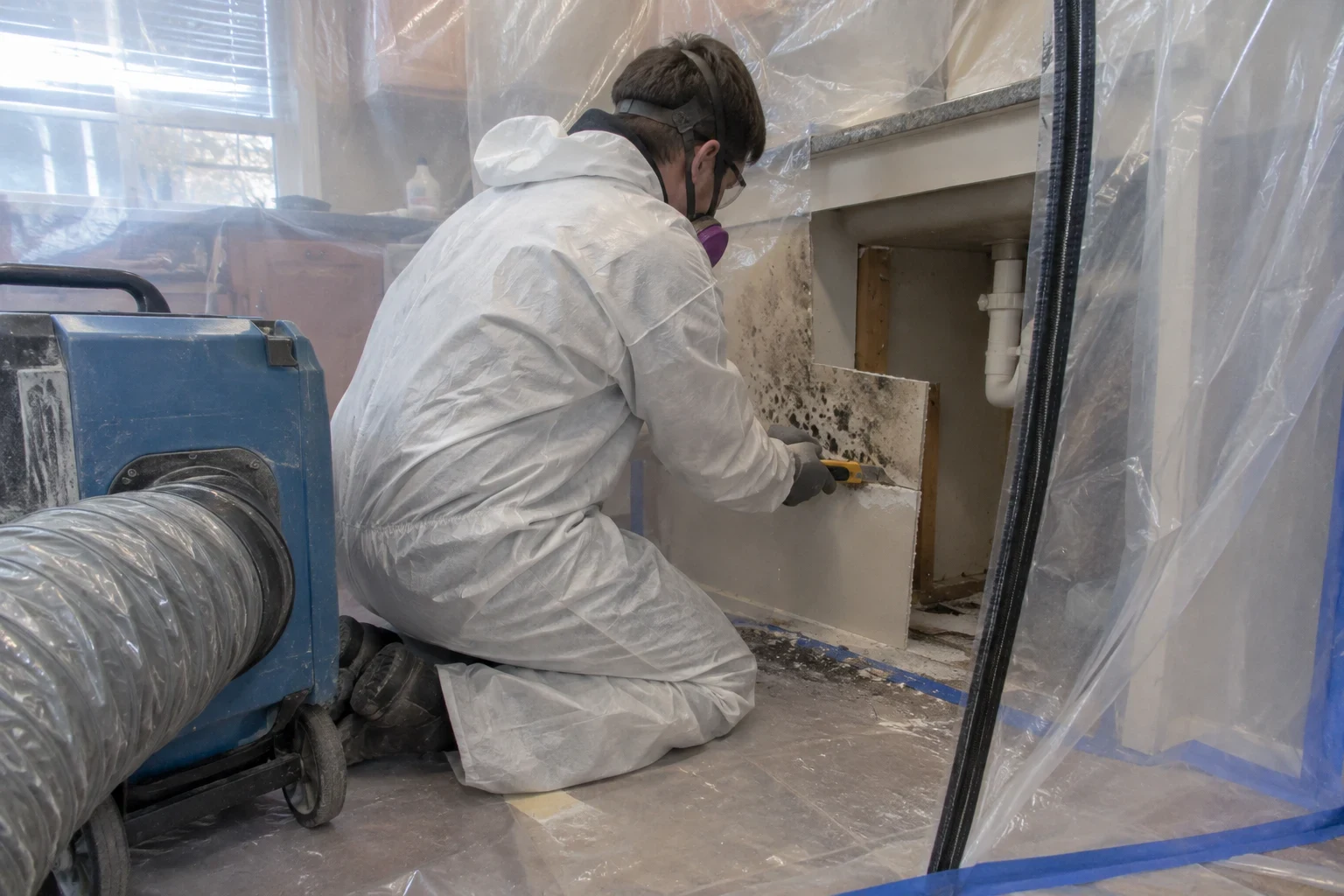
What mold remediation means in your home
Mold needs two things: moisture and something to feed on. Most of what a house is built from qualifies. The paper face on drywall, the backing on carpet and the dust inside a wall cavity all give it food. Remediation removes the growth, controls the spores while we work and dries the structure so the mold does not return.
The right approach depends on the material. Drywall, ceiling tile and carpet pad are porous, so growth works down into their fibers and cleaning the face does not reach it. Framing lumber and plywood subfloor are semi-porous and can often be cleaned and kept. Concrete, tile and metal almost always clean up well. Many older homes around the region still have plaster walls, which are denser than drywall and can often be saved where drywall could not.
Our crew is IICRC certified, and we follow that training on containment, removal and verification. We will tell you plainly what we found and what we recommend.
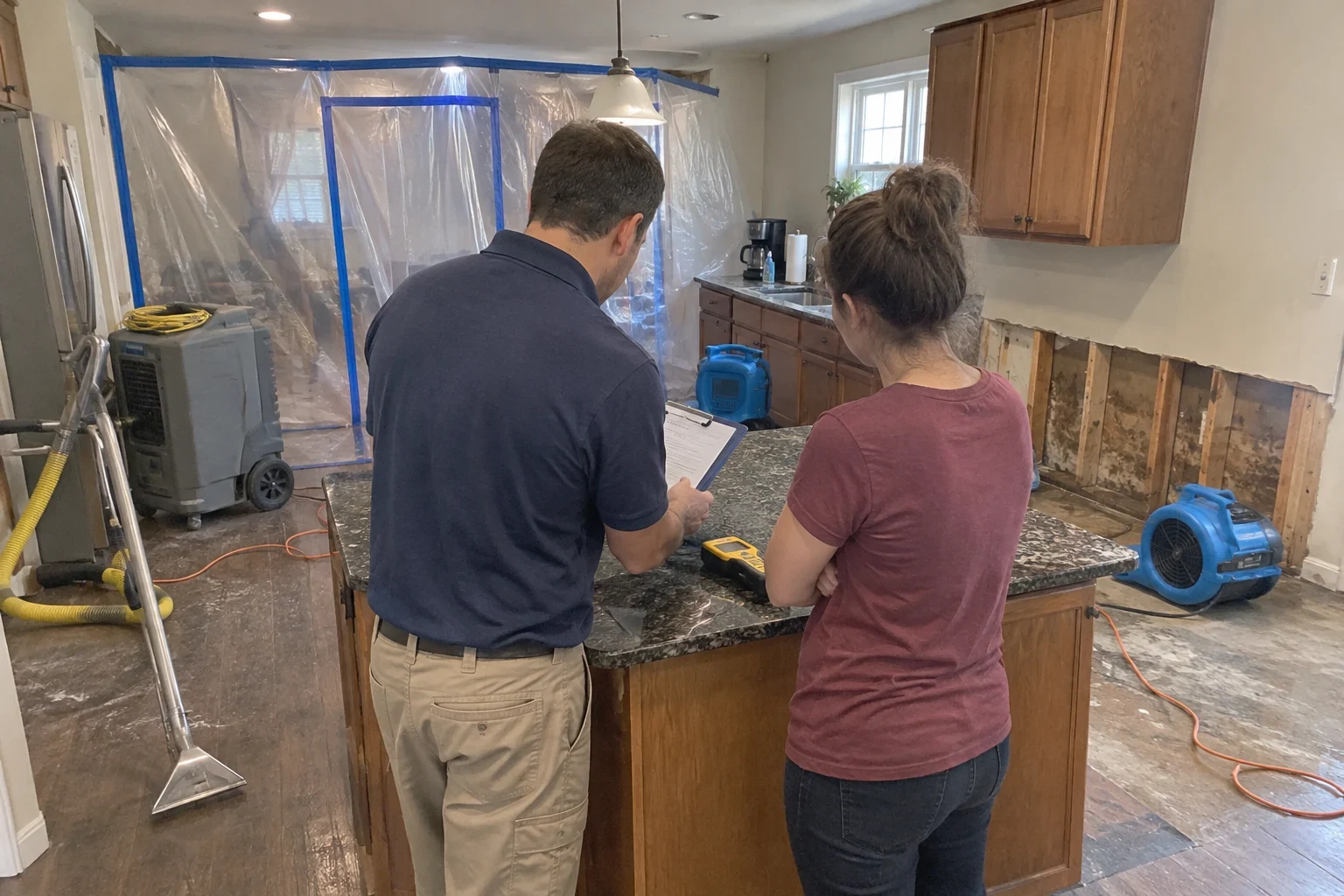
What the work includes
- 01
Moisture mapping
We use moisture meters and a thermal camera to trace how far the water has spread behind walls and under floors. Visible spots are usually only part of the problem, and the readings show us where to open up and where to leave things alone.
- 02
Containment and air filtration
We close off the affected rooms with poly sheeting and zipper doors, then set up HEPA air scrubbers that pull air inward and exhaust it outside. Spores knocked loose during removal are held in that zone instead of drifting through the rest of your home.
- 03
Cutting out what cannot be saved
Drywall, insulation and carpet pad with growth are cut back past the visible edge, bagged inside the sealed zone and carried out. We take out what the damage requires and nothing more.
- 04
Cleaning wood, plaster and masonry
Studs, joists and subfloor are HEPA-vacuumed, cleaned and treated, and we sand them where growth has stained the surface. Sound plaster and block walls get the same careful cleaning rather than demolition.
- 05
Drying and clearance
We dry the area to normal moisture levels before anything is closed up. If drywall, trim or flooring needs replacing afterward, our repairs and rebuild crew picks up from there.
Questions about Mold Remediation?
Call(804) 207-7415Signs you may need mold remediation
A musty smell that lingers
An earthy odor in a closet, basement or crawl space often comes before any visible growth. It usually means moisture is sitting somewhere you cannot see.
Spotting or staining on drywall
Gray, green or black flecks, or a yellowed patch that keeps spreading, point to growth on the paper face or behind it.
Cupped floors or soft baseboards
Hardwood that crowns or cups, and trim that feels soft, tell you water has reached the subfloor, where mold often grows unseen.
A leak that was never fully dried
A burst supply line, an overflowing tub or a roof leak from weeks ago can leave wet framing behind a wall that looks dry. Mold can begin within a day or two of the leak.
Damp crawl space or basement
Our humid summers keep below-grade spaces damp. Fuzzy growth on joists or sweating block walls is worth a closer look.
How a remediation day runs
- 1
Inspect and explain
We walk the affected rooms with you, take readings and photos, and explain which surfaces can be cleaned and which need to come out. You get a written scope before work begins.
- 2
Stop the moisture
Mold returns if the water source is still active. We confirm the leak or seepage has been stopped. If standing water remains, water extraction comes first.
- 3
Contain and protect
We lay floor protection along the path to the door, seal off the work zone and start the air scrubbers. Rooms outside the sealed area stay usable.
- 4
Remove, clean and dry
Moldy drywall, insulation and pad are removed and bagged. Framing and hard surfaces are cleaned and treated, and drying equipment runs until the readings return to normal.
- 5
Verify and hand off
We take final readings, photograph the cleaned structure and walk you through it. Then the space is ready for rebuild.
What affects the cost of mold remediation
Every job is priced on what we find, not on a flat rate. After the inspection you get a line-item estimate, so you can see what each part of the work involves. We work with most major insurance companies. We are glad to walk you through the usual steps of a claim, while the coverage decision stays with your adjuster.
- Area and surfaces involved
- A patch on one wall costs less than growth spread across drywall, insulation and subfloor. Each of those adds its own removal or cleaning steps.
- What is behind the wall
- Once a wall is opened, the framing and insulation set the scope. Clean studs need little work. Stained or damp ones need cleaning, treatment and more drying time.
- Access
- Crawl spaces, attics and finished basements take more setup and more care than an open room, both for sealing the area and for carrying debris out.
- Rebuild scope
- Replacing drywall, trim or flooring after remediation is priced separately, and the finish you choose shapes that part of the cost.
Mold remediation questions
Can I just spray bleach on it?
On tile or a sealed countertop, a surface cleaner can work. On drywall or wood, bleach mostly lightens the color while the growth stays rooted below the surface, and the added water can feed it. Drywall with real growth has to be cut out, and framing needs proper cleaning and sanding.
Do we need to leave the house during the work?
Usually not. The sealed zone and negative air keep the work area separate, so most families stay home and use the rest of the house. For extensive growth, or if someone in the house has breathing problems, we will talk through whether a few days away makes sense.
Can older plaster walls be saved?
Often, yes. Plaster gives mold far less to feed on than drywall paper, so growth tends to stay on the surface. If the plaster is sound and the lath behind it is dry, we clean it in place instead of tearing it out.
Will my insurance cover mold?
It depends on the policy and the cause. Mold from a sudden leak is often treated differently from mold caused by slow, long-term seepage. We document what we find with photos and readings, and we work with most major insurance companies, but the adjuster makes the coverage decision.
How quickly can you get here?
If mold is tied to an active leak or fresh water damage, our emergency water damage response puts us on site in 60 mins or less. For older, slower mold problems, we set up an inspection at a time that suits you.
How do you know the mold is gone?
We check the cleaned surfaces visually, confirm moisture readings have returned to normal and photograph everything before closing up. If you want independent air testing, we can work alongside a testing company you choose.
Find out what the mold is growing on
A free on-site inspection tells you which materials can stay, which need to go and where the moisture is coming from. We serve Petersburg, Colonial Heights, Hopewell, Chester and the towns nearby.